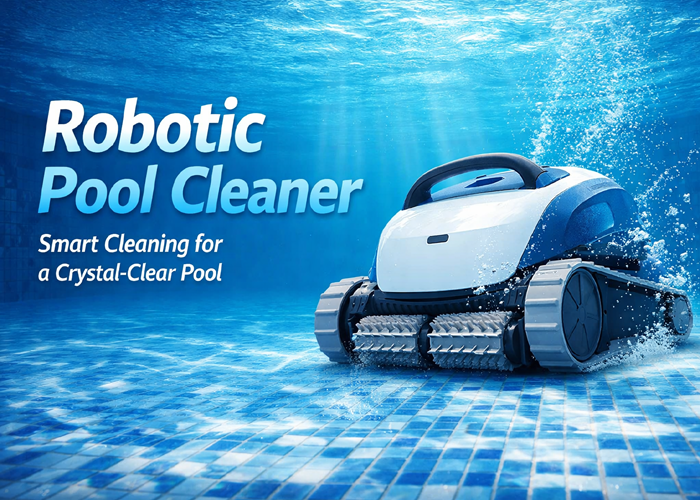
 The Ultimate Robotic Pool Cleaner Review: Smart Cleaning for a Crystal-Clear Pool
Keeping a swimming pool spotless used to mean long hours of manual vacuuming, tangled hoses and complicated suction systems. Today, robotic pool cleaners have completely changed that experience. These intelligent machines operate independently from your pool’s filtration system, using advanced sensors, powerful suction motors, and smart navigation to scrub, vacuum and filter debris automatically.
If you’re considering investing in a robotic pool cleaner, this in-depth review will walk you through how they work, their benefits, key features, pros and cons, top models, maintenance tips and whether they’re truly worth the price.
A robotic pool cleaner is an automated device designed to clean swimming pools without connecting to your pool pump or relying on suction pressure. It runs on electricity, typically via a low-voltage power supply, and uses built-in motors to move across the pool floor, walls and sometimes even the waterline.
Unlike traditional suction-side or pressure-side cleaners, robotic cleaners operate independently. That means:
No strain on your pool pump
Lower energy consumption
Advanced cleaning patterns
Fine filtration capability
In simple terms, it’s like having a robotic vacuum for your swimming pool.
Understanding how these machines operate will help you appreciate their efficiency.
Modern robotic cleaners use gyroscopic sensors, mapping algorithms and internal scanning systems to understand the shape and size of your pool. This prevents random cleaning patterns and ensures complete coverage.
Most units feature rotating brushes that actively scrub pool surfaces. This is particularly useful for removing algae buildup and stubborn dirt that passive cleaners may miss.
Robotic cleaners contain their own internal pump. They pull water in, trap debris in a filter basket or cartridge and return clean water back into the pool.
Many models offer ultra-fine filters that capture debris as small as pollen and sand. This improves overall water clarity.
Robotic cleaners consume significantly less electricity compared to running your pool’s main filtration system for extended hours.
By removing debris quickly and effectively, these cleaners reduce the need for excess chlorine and balancing chemicals.
Instead of manually vacuuming your pool weekly, you simply drop the cleaner in and press start.
Most robotic cleaners scrub floors, walls, and waterlines — areas often neglected by traditional systems.
Although the upfront cost is higher, robotic cleaners can reduce pump wear, energy costs and chemical expenses over time.
Before buying a robotic pool cleaner, consider these essential features:
Ensure the cleaner matches your pool type:
In-ground vs above-ground
Vinyl, fiberglass or concrete surfaces
Pool size and shape
Some models clean:
Floor only
Floor and walls
Floor, walls and waterline
Look for:
Fine filters for leaves
Ultra-fine filters for sand and pollen
Make sure the power cord is long enough to reach all corners of your pool.
Some advanced models include Wi-Fi control via smartphone apps.
Below are some of the most popular and highly rated robotic pool cleaners on the market.
This model is one of the most widely recommended robotic cleaners for residential in-ground pools.
Cleans floor and walls
Smart navigation technology
Top-loading filter cartridges
2-hour cleaning cycle
Excellent wall climbing ability
Easy maintenance
Reliable brand reputation
No waterline cleaning
No built-in Wi-Fi
Best For: Homeowners wanting strong performance at a mid-range price.
This premium robotic cleaner is designed for advanced performance and smart control.
Wi-Fi connectivity
Waterline cleaning
4WD technology
Programmable cleaning schedules
Smartphone app control
Superior wall and waterline scrubbing
Strong suction power
Higher price range
Slightly heavier than competitors
Best For: Pool owners looking for full automation and remote control convenience.
Cordless robotic cleaners are gaining popularity and this model stands out in the category.
Quad-motor system
Cleans floor, walls and waterline
Smart parking technology
Easy retrieval
Modern design
Limited battery runtime
Longer recharge time
Best For: Those who dislike managing power cords.
Known for its quick clean cycle, this robotic cleaner delivers fast results.
Powerful scrubbing brushes
Self-contained filtration
Strong debris pickup
Durable construction
No smart app features
Best For: Users wanting fast and efficient cleaning sessions.
| Feature | Robotic Cleaner | Suction Cleaner | Pressure Cleaner |
|---|---|---|---|
| Energy Efficiency | High | Medium | Medium |
| Independent Operation | Yes | No | No |
| Advanced Navigation | Yes | No | Limited |
| Wall Climbing | Yes | Rare | Limited |
| Initial Cost | Higher | Lower | Moderate |
Robotic cleaners clearly dominate in performance and efficiency, though they come with a higher upfront investment.
Setting up a robotic pool cleaner is simple:
Plug the power supply into a GFCI outlet.
Place the cleaner in the pool.
Submerge it to remove air bubbles.
Select cleaning mode.
Let it run.
No plumbing modifications required.
To extend the life of your robotic pool cleaner:
Rinse filter cartridges after each use.
Remove debris from brushes weekly.
Store indoors when not in use.
Avoid running it in extremely cold water.
Inspect the cable for twists regularly.
Routine care ensures optimal performance for years.
Cleaner Not Moving
Check power supply
Inspect for blocked impeller
Reset the unit
Clean filter basket
Check for debris in intake
Ensure brushes are not worn out
Check pool surface compatibility
Most issues are minor and easily resolved without professional service.
If you value convenience, energy savings and superior cleaning performance, the answer is yes.
While prices typically range from mid-level to premium, the return on investment becomes clear through:
Lower electricity bills
Reduced chemical use
Less wear on pool equipment
Time saved
For frequent swimmers or pool owners in areas with heavy debris, a robotic cleaner can dramatically improve maintenance efficiency.
Robotic pool cleaners are ideal for:
Busy homeowners
Large in-ground pool owners
People struggling with algae issues
Those wanting reduced manual labor
If you rarely use your pool or have a very small above-ground pool, a basic suction cleaner may still be sufficient.
Technology continues to evolve rapidly. New models now include:
AI-powered mapping
Voice assistant integration
App-based scheduling
Improved lithium battery systems
Self-emptying filtration systems
The trend is clear: robotic cleaners are becoming smarter, more energy-efficient and easier to maintain.
Robotic pool cleaners represent one of the most valuable upgrades a pool owner can make. They combine intelligent navigation, powerful suction and energy efficiency into one self-contained unit.
Models like the Dolphin Nautilus CC Plus offer reliability and performance for mid-range budgets, while premium options such as the Polaris 9650iQ bring full smart automation. Cordless innovations like the Aiper Seagull Pro remove cable frustrations and durable classics like the Hayward TigerShark QC deliver dependable cleaning cycles.
Ultimately, the right cleaner depends on your pool size, budget and desired features. But one thing is certain: robotic pool cleaners are no longer a luxury — they are quickly becoming the standard for modern pool maintenance.
If your goal is crystal-clear water with minimal effort, investing in a robotic pool cleaner may be the smartest decision you make for your backyard oasis.




💬 Comment Section