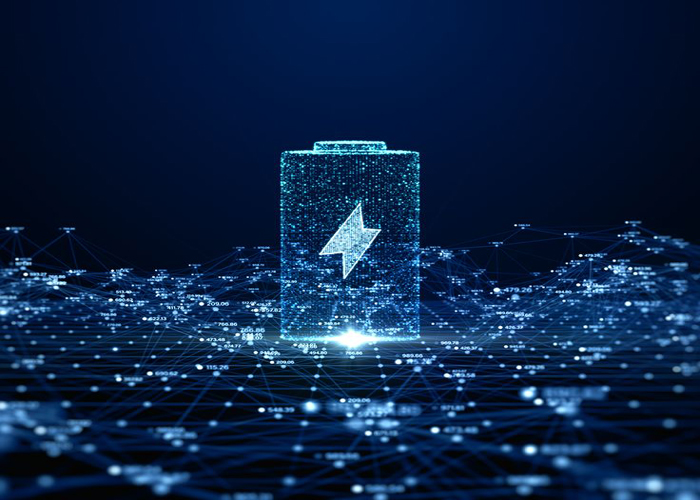
 How Electrification and Next-Gen Battery Tech are Rebuilding the Modern World
The global energy conversation has undergone a radical "phase shift." We are no longer debating if we should electrify, but how fast we can scale the storage required to make that electricity useful. The "Great Recalibration" is here, and at its center lies the battery—no longer just a component of a phone or car, but the literal foundation of a new, sovereign energy architecture.From the first commercial solid-state motorcycles hitting the streets to the rise of the "Prosumer" grid, the electrification of 2026 is about more than just switching fuels; it is about decoupling civilization from combustion.
Why 2026 is the Year of BreakthroughFor decades, we relied on traditional Lithium-Ion ($Li-ion$) chemistry. While it served us well, it hit a physical "ceiling" in terms of energy density and safety. In 2026, we are finally smashing through that ceiling.The Problem: The "Combustion Anxiety" and Weight PenaltySafety Paradox: Traditional liquid electrolytes are flammable. As we push for faster charging, the risk of "thermal runaway" increases.Range vs Weight: To get a 500-mile range in a 2023 EV, you needed a battery so heavy it degraded the car’s efficiency.Charging Friction: Waiting 45 minutes at a charger is the last barrier for the mass-market consumer.The Solution: The Solid-State MigrationIn 2026, Solid-State Batteries (SSBs) have moved from the laboratory to pilot production lines. By replacing the flammable liquid "juice" with a solid ceramic or polymer electrolyte, we achieve:Intrinsic Safety: These batteries simply cannot catch fire, even in high-speed collisions.Energy Density Surge: We are seeing cells hitting 400-500 Wh/kg—nearly double the density of the 2020 standard.Extreme Fast Charging: SSBs can handle 0-80% charges in under 10 minutes without the degradation that plagues liquid cells.
The Rise of Sodium and SulfurThe 2026 supply chain is defined by Mineral Realism. We’ve realized that the world simply cannot mine enough lithium to electrify everything at once.The Problem: Geopolitical Bottlenecks and Lithium ScarcityConcentrated supply chains have made lithium a "geopolitical weapon." Furthermore, the environmental cost of traditional lithium extraction is at odds with the "green" mission.The Solution: The Dual-Track Chemistry StrategySodium-Ion ($Na-ion$): Sodium (salt) is everywhere. In 2026, Na-ion batteries have reached "Cost Parity" for entry-level EVs and stationary grid storage. They are cheaper, safer, and work better in freezing temperatures.Lithium-Sulfur ($Li-S$): For the first time, we are seeing Li-S batteries used in long-endurance drones and regional aviation. Sulfur is a waste product of industrial processes, making these batteries incredibly lightweight and inexpensive to produce.
Vehicles as Power PlantsIn 2026, your car is no longer just a depreciating asset; it is a Mobile Revenue Stream.The Problem: Grid Instability from RenewablesAs solar and wind provide 40% of global power, the grid has become "nervous." It needs massive, rapid-response storage to prevent blackouts when the sun sets.The Solution: V2X (Vehicle-to-Everything)We have moved into the era of Bidirectional Energy Sovereignty.V2G (Vehicle-to-Grid): Millions of EVs are now "Aggregated" into Virtual Power Plants (VPPs). During peak demand, your car sells electricity back to the grid at a profit.V2H (Vehicle-to-Home): During a storm-induced blackout, a modern EV can power an average home for 3 to 5 days, making every driveway a backup generator.
The Final FrontierAs of 2026, the focus has shifted from passenger cars to the "Un-electrifiable" sectors: Shipping, Aviation, and Heavy Industry.The Problem: The "Energy Density Gap" for Planes and ShipsA gallon of jet fuel contains about $50 \times$ more energy by weight than the best 2022 batteries. This made electric planes a fantasy for long-haul flights.The Solution: Modular Hybridization and Silicon AnodesSilicon Anodes: By replacing graphite with silicon, we’ve boosted battery capacity by 20% in just two years. This is enabling "Regional Electric Aviation" (flights under 500 miles).Mega-Watt Charging (MCS): 2026 saw the debut of the 1MW charging standard, allowing long-haul electric trucks to add 300 miles of range in just a 30-minute mandatory break.
Ending the "E-Waste" NightmareThe 2026 regulatory landscape no longer allows for "take-make-waste."The Problem: The "Battery Graveyard"Early EV batteries are reaching their end-of-life. Without a plan, they become a toxic environmental liability.The Solution: Hydro-Metallurgical Urban MiningWe have moved away from "Smelting" (which burns off valuable materials) to Hydrometallurgy.98% Recovery: Modern recycling facilities in 2026 can recover 98% of the nickel, cobalt, and lithium from a dead cell.Direct Recycling: A new 2026 breakthrough allows us to "refurbish" the cathode crystals directly, skipping the chemical breakdown and reducing the carbon footprint of "recycled" batteries by 70%.
The "Induction" FutureBy the end of this decade, we predict the "End of the Plug."Dynamic Wireless Charging: Roads in major hubs like Oslo, Shanghai, and Los Angeles are being fitted with induction coils. Your car charges while you drive, allowing for smaller, lighter batteries and infinite range.Battery-as-a-Service (BaaS): You won't own the battery; you’ll subscribe to a "Storage Cloud," swapping depleted packs for fresh ones in 60 seconds at automated stations.
The New Infrastructure of HopeElectrification and battery technology are no longer niche sectors for environmentalists—they are the core of National Security and Economic Stability in 2026. By moving from a "Liquid Fuel" economy to a "Solid Storage" economy, we are building a world that is quieter, cleaner, and infinitely more resilient.The revolution isn't just about the car in your garage; it's about the electrons in the wire and the salt in the cell.Is your business strategy optimized for the 10-minute charge and the bidirectional grid?
in Solid-State MigrationAs mentioned, 2026 is the year China and other global leaders have set formal Solid-State Battery Standards. But why has this been so hard?The Deep Reason: Solid-to-Solid ContactIn a traditional battery, the liquid electrolyte flows like water, touching every nook and cranny of the electrodes. In a solid-state battery, you are trying to press two solids (the electrode and the electrolyte) together.The Problem: As the battery charges and discharges, the materials physically expand and contract. This creates microscopic gaps—delamination—which stops the flow of electrons.The 2026 Solution: Superfluidized electrolytes and composite polymers. Engineers are now using "soft" solids that act like a stiff gel, maintaining contact even as the battery "breathes" during use. This allows for the 1,000+ km range we are beginning to see in premium 2026 EV models.
The "Strategic Hedge"While Solid-State is the "Premium" play, Sodium-Ion ($Na-ion$) is the "Mass-Market" hero of 2026.The Logic of AbundanceLithium prices are volatile and supply is concentrated. Sodium is found in common table salt ($NaCl$).The Problem: Sodium ions are larger than Lithium ions, making them "sluggish." They originally struggled to provide the power needed for fast acceleration.The 2026 Solution: Hard Carbon Anodes. By creating a more "open" molecular structure in the anode, scientists have given the larger sodium ions a "highway" to move through.Result: Sodium batteries now retain 90% of their capacity at -40°C, a feat traditional lithium batteries could never achieve. This makes them the primary choice for energy storage in cold climates and for affordable urban EVs.
The "End of the Plug" We are moving toward Dynamic Wireless Power Transfer (DWPT). Imagine a world where the road charges the car.How it WorksCoils are embedded under the asphalt of major highways. As your EV drives over them, a magnetic field transfers energy to a receiver on your car’s undercarriage via Resonant Inductive Coupling.The Problem: Efficiency usually drops if the car isn't perfectly aligned or if it's moving too fast.The 2026 Solution: Segmented DWPT. Instead of one long "live" wire, the road is broken into segments that only "wake up" when they sense a car directly above them. This prevents energy waste and ensures 90%+ efficiency even at 120 km/h.
Hydrometallurgy vs SmeltingBy 2026, the first wave of "early adopter" EV batteries from the 2010s is hitting the scrap yard. We cannot afford to bury them.
The Process: "Urban Mining"Traditional recycling (pyrometallurgy) involves melting batteries down, which burns off the lithium and plastic. Hydrometallurgy is the 2026 gold standard.
The Method: Using chemical solvents at low temperatures to leach out specific metals.
The Reason: It allows for the recovery of 98% of rare earth elements. In 2026, many battery manufacturers are finding it cheaper to "mine" old batteries than to dig new holes in the ground. This is the birth of the Circular Battery Economy.



💬 Comment Section