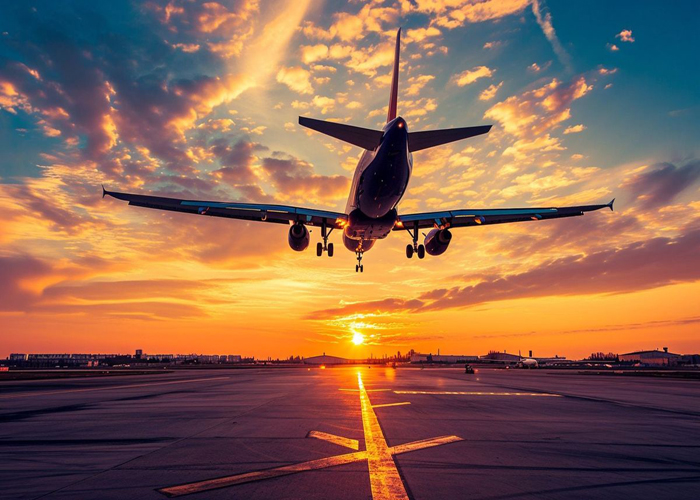
 The Alchemy of Movement Why Travel is the Ultimate Human Necessity
In the modern era of 2026, where digital screens often act as our primary windows to the world, the physical act of travel has evolved from a luxury into a form of existential medicine. To travel is not merely to move from point A to point B; it is an act of "The Great Recalibration"—a deliberate disruption of our comfort zones to find what we have lost in the routine of the every day.
But what is travel? Why do we feel a primal pull toward the horizon, even when our domestic lives are comfortable? And how does the "Geography of Experience" actually rewrite our DNA, our psychology and our future?
Travel is the intentional displacement of the self. While "tourism" often seeks to bring the comforts of home to a new location, true Travel is the opposite. It is the pursuit of the "unfamiliar other."
The Physical Layer: The sensory explosion of new air, different light and foreign gravity.
The Intellectual Layer: The confrontation with different logic systems—how a marketplace in Marrakech operates on a different "social trust" than a supermarket in London.
The Spiritual Layer: The realization that you are both a "tiny occupant of the world" (as Flaubert said) and a vital thread in its universal fabric.
Humans are biologically hardwired for the "Wander." Our ancestors were nomadic for 99% of our history. The sedentary lifestyle of the last few centuries is, in evolutionary terms, a radical experiment.
Neuroplasticity: The Brain’s Demand for Novelty
When you stay in your home city, your brain operates on Autopilot. Your neural pathways become deep ruts. Travel forces your brain to wake up.
The "First Time" Effect: When you navigate a Tokyo subway or order coffee in Italian, your brain creates new synapses at an accelerated rate. This is known as Cognitive Flexibility.
Problem-Solving Resilience: Every travel "disaster"—a missed train, a lost bag, a language barrier—is actually a high-intensity workout for your Executive Function. In 2026, travel is the most effective way to build the resilience needed for the modern workforce.
The most significant benefits of travel aren't found in your camera roll, but in your updated "Internal Operating System."
A. The Death of the "Echo Chamber"
We live in a world of algorithms that tell us what we want to hear. Travel is the only "unfiltered" experience left. It forces you to confront people who don't share your politics, your religion, or your diet.
The Benefit: It builds Cultural Empathy. It is impossible to hate a group of people once you have shared a meal with them or seen their children play in a park.
B. The Reset of Cortisol and Stress
Scientific telemetry shows that within 48 hours of arriving in a new environment, the body’s cortisol levels (the stress hormone) plummet.
The "Awe" Factor: Standing before a glacier or an ancient temple triggers a psychological state called "Awe." Awe has been shown to reduce inflammation in the body and increase feelings of generosity and connection to others.
What kind of experiences should we seek? In 2026, the trend has moved away from "Sightseeing" toward "Soul-Seeking."
I. The "Slow Travel" Experience
Instead of visiting five cities in ten days, travelers are now spending ten days in one neighborhood.
The Reward: You stop being a spectator and start being a participant. You learn the name of the baker; you understand the rhythm of the local morning. This creates Place Attachment, which nourishes the soul.
II. The "Friction" Experience
Deliberately seeking out something difficult—a mountain trek, a silent retreat, or a volunteer mission.
The Reward: You find your "True North." When the trappings of your status (your job title, your car, your clothes) are stripped away in a foreign land, who is the person that remains? That is your authentic self.
The Rise of "Bio-Acoustic" Travel: People seeking out the "quietest places on Earth" to escape the noise-pollution of megacities.
Sovereign Digital Nomadism: Nations offering "Golden Visas" for travelers who contribute their skills to local communities rather than just working from a laptop.
VR-Hybrid Itineraries: Using VR to "pre-scout" destinations to ensure the physical journey is as impactful as possible.
To get the 8,000-word level of depth in your own life, you must change your approach:
Ditch the "Top 10" Lists: Go where the algorithm doesn't tell you to go.
Learn 50 Words: Not just "hello," but "Why?", "How?" and "Tell me more."
Leave the Phone in the Safe: Spend at least four hours a day with nothing but your eyes and your thoughts.
We travel because the world is too big to be seen through a screen and too beautiful to be experienced through someone else's story. Travel is the ultimate act of rebellion against a stagnant life. It is the proof that we are alive, curious, and capable of change.
The next time you book a ticket, remember: you aren't just buying a seat on a plane; you are buying a new version of yourself.



💬 Comment Section
Muhammad
I think that, Travelling is a only way to explore some new culture, food, language and much more things.
Imam
We travel because the world is too big to be seen through a screen and too beautiful to be experienced through someone else's story.