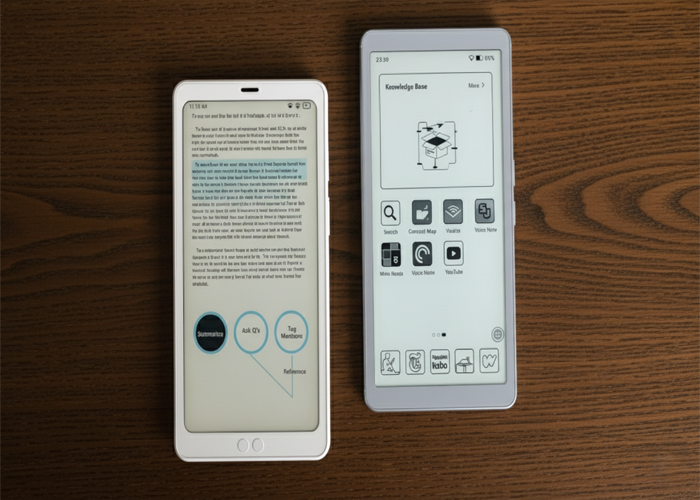
 The AI-Powered Academic: A Deep Dive into the Latest AI Paper Reader
The ivory tower, once a bastion of quiet contemplation and dusty archives, is rapidly becoming a vibrant, if sometimes bewildering, digital landscape. For anyone immersed in research, academia, or professional fields driven by cutting-edge discoveries, the sheer volume of scientific papers, reports, and analyses published daily is nothing short of overwhelming. Keeping abreast of breakthroughs, let alone understanding their nuances, has become a full-time job in itself. Enter the AI Paper Reader—a new generation of tools promising to transform how we interact with academic literature.
These aren't just glorified PDF viewers. The latest AI Paper Readers leverage sophisticated Natural Language Processing (NLP), machine learning, and generative AI to not just display papers, but to understand them. They promise to distill complex arguments, highlight key findings, cross-reference concepts, and even engage in Socratic dialogue with the text. But are they the revolutionary scholarly assistants we've been dreaming of, or simply another layer of digital distraction? After extensive use, let’s peel back the layers of hype and take a realistic look at the good, the bad, and the genuinely revolutionary aspects of the latest AI Paper Readers.
The potential benefits of a truly intelligent AI paper reader are immense, addressing many of the core pain points faced by researchers, students, and professionals alike.
This is perhaps the most immediate and profound advantage. Instead of laboriously sifting through dense paragraphs of jargon, an AI reader can:
Summarize Abstracts and Sections: Within seconds, the AI can generate concise summaries of abstracts, introductions, methodologies, results, and conclusions. This is invaluable for quickly assessing a paper's relevance before diving deep, saving hours of skim-reading.
Identify Key Findings and Contributions: The AI can pinpoint the core innovation, the primary experiment, or the most significant results, often presenting them as bullet points or a short paragraph. This cuts through the academic "fluff" and gets straight to the actionable information.
Extract Definitions and Explanations: Encountering an unfamiliar term or concept? The AI can often provide on-the-spot definitions drawn from the paper itself, or even external sources if integrated, without needing to open a new tab or consult a dictionary. This dramatically reduces context switching and maintains flow.
Highlight Argument Structures: Some advanced readers can visualize the logical flow of a paper, showing how different sections contribute to the main argument. This is especially helpful for understanding complex theoretical papers or identifying weaknesses in reasoning.
Beyond passive summarization, the latest tools enable a dynamic dialogue with the text:
Ask Direct Questions: This is a game-changer. Instead of searching for keywords, you can ask questions like, "What were the limitations of their study design?", "What data sources did they use?", or "What alternative explanations did they consider?" The AI then sifts through the text to provide a direct, context-aware answer. This is akin to having a highly intelligent research assistant who has read the paper for you.
Cross-Referencing within a Paper (or a Library): Need to see where a specific methodology was discussed in relation to the results? The AI can instantly navigate to relevant sections. Even more powerful, some tools can cross-reference concepts or citations across multiple papers in your uploaded library, creating a mini-knowledge graph specific to your research domain.
Clarification of Complex Passages: If a particular sentence or paragraph is proving difficult to parse, you can ask the AI to "explain this in simpler terms" or "break down this equation." This can be an invaluable learning aid for students or researchers venturing into new sub-disciplines.
Academic work often involves juggling dozens, if not hundreds, of papers. AI readers aim to bring order to this chaos:
Smart Annotation and Highlighting: Beyond manual highlighting, some AI tools can automatically highlight important sections based on predefined criteria (e.g., all methodological details, all calls for future work). They can also summarize your highlights.
Automatic Tagging and Categorization: When you upload papers, the AI can suggest relevant tags or even categorize them by research area, methodology, or core topic, making your personal library far more searchable and organized.
Citation and Reference Management Integration: Many tools are beginning to integrate seamlessly with reference managers like Zotero or Mendeley, allowing for quick citation extraction and organization, reducing one of the most tedious aspects of academic writing.
Report Generation: Imagine being able to ask your AI reader to "generate a summary report of the key findings from these five papers on quantum computing," and it provides a coherent, synthesized overview, complete with citations. This capability, while still nascent, holds immense promise.
For those outside specialized fields, or even within them but across disciplinary divides, scientific literature can be a formidable barrier.
Breaking Down Jargon: By offering simplified explanations, AI readers can make complex science more accessible to non-experts, fostering interdisciplinary understanding and public engagement with science.
Supporting Non-Native English Speakers: For researchers whose first language isn't English, the ability to quickly grasp nuances, clarify ambiguities, and summarize content can significantly level the playing field, reducing a major barrier to participation in global academia.
Aids for Learning and Teaching: Students can use these tools to understand complex papers more quickly, identify areas they need to focus on, and even generate practice questions based on the content. Educators can use them to rapidly prepare summaries or identify core concepts for lectures.
The Bad: Limitations, Concerns, and the Human Element
While the "good" list is compelling, AI Paper Readers are not without their significant drawbacks and raise important questions about the future of intellectual work.
This is the most critical flaw. AI models, particularly generative ones, are prone to "hallucinations"—generating confident but utterly false information. In the context of scientific literature, this can be disastrous:
Fabricated Summaries: The AI might invent a research finding that doesn't exist in the paper or misrepresent a methodology.
Incorrect Interpretations: It might draw faulty conclusions based on a superficial reading or misinterpret nuanced language, especially in highly specialized fields.
False Citations: In the worst-case scenario, an AI might generate a citation to a non-existent paper or attribute a finding to the wrong source.
Bias Reinforcement: If the underlying training data is biased, the AI's summaries or interpretations might inadvertently perpetuate those biases, leading to a skewed understanding of research landscapes.
For researchers, relying uncritically on an AI's output could lead to egregious errors in their own work, undermining academic integrity and scientific accuracy. The onus remains firmly on the human user to verify everything.
AI operates on patterns and statistical relationships, not genuine comprehension.
Missing Subtleties and Nuances: Scientific papers are rich with implicit context, unspoken assumptions within a field, and subtle rhetorical choices. An AI, even a sophisticated one, can easily miss these deeper layers of meaning. It might extract facts but fail to grasp their full significance or the historical context of a debate.
Inability to Identify Flaws in Reasoning: While it can summarize limitations stated by the authors, an AI is generally ill-equipped to independently critique the logical validity of a complex argument, identify subtle methodological errors, or challenge the theoretical framework of a paper. That critical analysis still requires human expertise.
No Intuition or Creativity: The AI cannot generate novel insights, connect disparate ideas in a truly creative way, or propose groundbreaking new research directions from a "deep understanding" of the literature. It synthesizes existing information; it does not innovate.
The ease and speed of AI tools can be a double-edged sword:
Diminished Critical Reading Skills: If researchers consistently rely on AI summaries, their own ability to critically engage with dense text, identify arguments, and synthesize information manually might atrophy. The "muscle" of deep reading needs exercise.
Loss of Serendipity: Sometimes, the most valuable insights come from the struggle of wrestling with a difficult paper, from noticing an unexpected detail, or from the process of slow, careful reading. AI, by design, seeks efficiency, potentially stripping away these moments of serendipitous discovery.
Superficial Knowledge: A reliance on AI-generated summaries might lead to a broad but superficial understanding of a field, lacking the depth and nuance that comes from directly engaging with primary sources.
Uploading sensitive or unpublished research papers to third-party AI tools raises significant questions:
Proprietary Information: For corporate R&D or classified academic research, uploading documents could expose proprietary information. What are the service providers' data retention policies? Is the data used for further AI training?
Pre-Publication Research: Researchers often work with unpublished drafts. Submitting these to a public AI service could potentially compromise intellectual property or give other users (or the AI itself) access to unreleased findings.
GDPR and Compliance: Handling research that involves human subject data or other sensitive information requires strict adherence to regulations like GDPR. The use of AI tools adds a complex layer to this compliance.
While many AI tools offer free tiers, advanced features and higher usage limits typically come with subscription fees.
Digital Divide: This can create a new form of digital divide, where researchers in well-funded institutions have access to superior tools and thus a competitive advantage, while those in less privileged settings are left behind.
Sustainability of Business Models: The long-term pricing and business models of these services are still evolving, and reliance on them could lead to unexpected costs down the line.
The Nuanced Future: Collaboration, Not Replacement
The latest AI Paper Readers are neither a panacea nor a harbinger of intellectual doom. They are tools—powerful, intelligent, and rapidly evolving tools. Their true value lies not in replacing human intellect, but in augmenting it.
AI handles the grunt work: It rapidly triages vast amounts of literature, flags relevant papers, extracts key data points, and offers initial summaries.
Humans provide the critical thought: Researchers then dive deep into the AI-filtered, AI-summarized papers, bringing their expertise, critical reasoning, intuition, and creativity to bear on the most important aspects. They verify the AI's claims, critique the arguments, identify subtle connections, and generate novel ideas.
Interactive learning is enhanced: Students use AI readers as personalized tutors, helping them navigate complex texts and grasp difficult concepts, freeing up educators to focus on higher-level critical thinking and project-based learning.
Interdisciplinary collaboration is smoother: Researchers from different fields can use AI to quickly get up to speed on the core concepts and findings of an unfamiliar discipline, fostering more fruitful cross-pollination of ideas.
The "latest AI Paper Reader" is a reflection of a broader trend: AI's entry into every facet of intellectual labor. It forces us to reconsider what human intelligence truly excels at—critical analysis, creative synthesis, ethical judgment, and the nuanced understanding of context. The journey with these tools will involve constant adaptation, careful verification, and a commitment to leveraging technology to deepen, rather than dilute, the richness of scholarly inquiry. The future of academic reading is not just AI, but a dynamic, collaborative intelligence where the best of human and artificial capabilities converge.





💬 Comment Section